

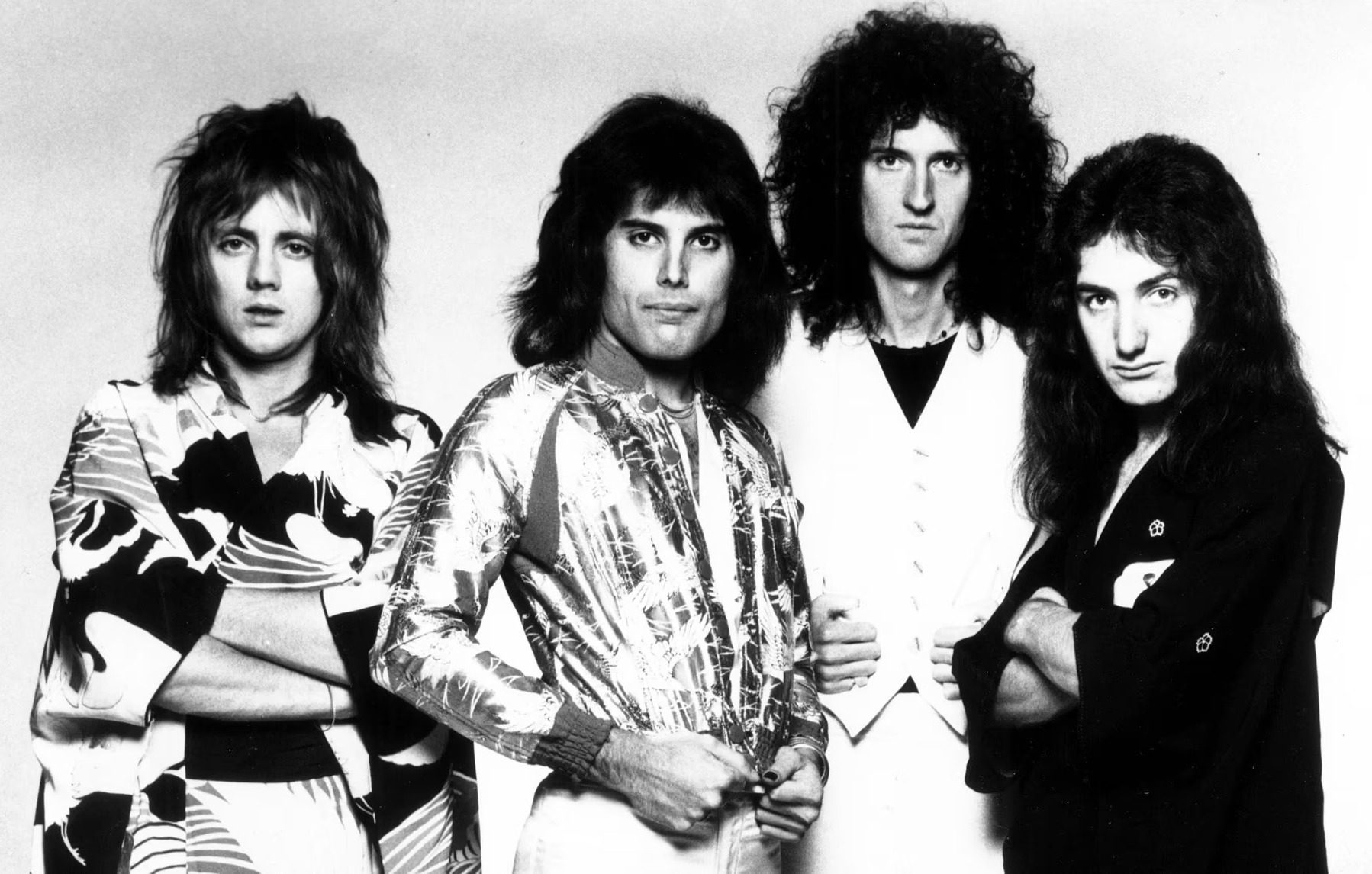
Imagine being the person who heard Bohemian Rhapsody for the first time and said “nah, this won’t work.” Painful, right? Turns out the music industry has a long and embarrassing history of getting it spectacularly wrong — passing on songs that went on to define entire eras. Here are some of the most jaw-dropping rejections in music history.
Bohemian Rhapsody – Queen
Let’s start with the big one. When Queen finished recording Bohemian Rhapsody in 1975, radio stations and EMI executives were convinced it was commercial suicide. A six-minute song with operatic sections, no clear chorus, and a tempo that changed three times? Absolutely not.
The band refused to cut it. So Freddie Mercury quietly handed a demo to his friend Kenny Everett, a London DJ, with strict instructions not to air it — just to give feedback. Everett loved it so much he played it fourteen times over one weekend, telling his boss each time that his “finger had slipped.”
Listener demand forced the label’s hand. Bohemian Rhapsody was released in full, went to number one in the UK, and held that spot for nine weeks over Christmas. It’s now been streamed over two billion times. The label’s finger did slip — right off the pulse of popular music.
“…Baby One More Time” – Britney Spears
Before this became one of the best-selling singles in history, it was turned down by not one but two other acts. TLC passed on it because they felt the title sounded like a reference to domestic violence. The boy band Five also said no.
The song eventually landed with a then-unknown teenager named Britney Spears, who recorded it in 1998 and launched one of the biggest pop careers of the 20th century. TLC went on to have plenty of their own hits — but you have to wonder if they ever had a quiet moment of “what if.”
“Don’t You (Forget About Me)” – Simple Minds
This one is almost too good. The song that closes The Breakfast Club — the fist-in-the-air, end-of-an-era anthem — was rejected by Simple Minds themselves. Multiple times.
Frontman Jim Kerr later said the cassette came their way and the song “wasn’t bad,” but the band didn’t want to record material they hadn’t written themselves. They turned it down. Then turned it down again. They eventually said yes when they understood the film’s context, recorded it quickly, and released it almost reluctantly.
It hit number one in the US, Canada, and the Netherlands, and became the defining song of their career. Decades on, it’s impossible to imagine anyone else singing it.
“Smells Like Teen Spirit” – Nirvana
Here’s a twist — this rejection came from inside the house. Kurt Cobain himself wasn’t sure the song should be released as a single. He didn’t think it was commercially strong enough and reportedly expected nothing from it.
It went out anyway, defined the grunge era overnight, and became one of the most recognisable opening riffs in rock history. Sometimes the artist needs to get out of their own way as much as the label does.
“What’s Going On” – Marvin Gaye
Motown founder Berry Gordy refused to release this one, calling it uncommercial and too political. He thought it would confuse audiences and damage Gaye’s image as a pop and soul artist. Gaye pushed back hard — reportedly making it a condition of his continued work with the label.
Gordy eventually gave in. What’s Going On was released in 1971 and is now regularly cited as one of the greatest albums ever made. Gordy later admitted it was the worst mistake of his career.
The lesson? Trust the song.
Every entry on this list has one thing in common: the artist believed in it when nobody else did. The music industry runs on gut instinct and pattern recognition — and sometimes the most groundbreaking things simply don’t fit the pattern yet.
So the next time someone tells you something won’t work — maybe let your finger slip too.
0 Comments